How to Import from China to the USA: A Step-by-Step Guide for 2026
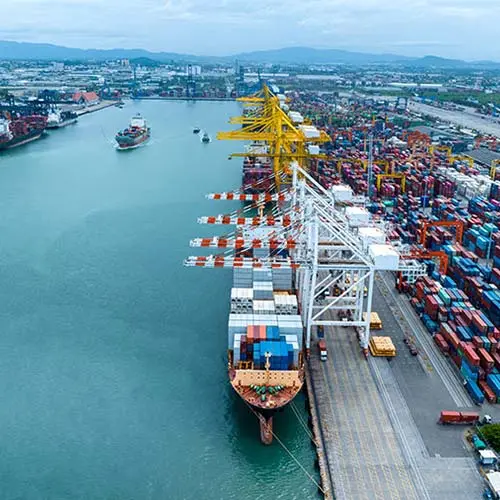
China is still the largest single source of goods for many American businesses, from furniture and building materials to machinery, auto parts and electronics. Importing from China is not complicated once you know the order of the steps — but most of the expensive mistakes happen before the goods ship, when a product’s rules, its tariff classification or the shipping terms were never checked.
This guide walks through the whole process the way we run it for our clients, from checking that your product can be imported to the moment the container is unloaded at your door. It is written for businesses importing pallets and containers. If you are buying a few small parcels, an express courier is usually the simpler route.
How to Import from China to the USA: The Short Answer
- Check your product’s rules — which US agencies regulate it (CPSC, FCC, FDA, EPA and others) and whether forced-labor rules touch its supply chain.
- Classify it under the US tariff schedule and work out which duty layers apply: the normal duty, Section 301 on Chinese goods, and any Section 232 or antidumping duties.
- Find and vet a supplier, and agree on price, specifications, payment and the Incoterm.
- Set up as an importer: your importer number and a customs bond.
- Choose how it ships: a full container (FCL), shared container space (LCL) or air.
- File the ISF at least 24 hours before an ocean container is loaded in China.
- Clear US customs: the entry is filed, duties and fees are paid, and any agency review is completed.
- Deliver: the container is collected from the port and trucked to your warehouse, or transloaded for the rest of the trip.
You stay in charge of steps 1–3 (with advice from your customs broker); a freight forwarder with its own people in China and licensed customs brokers in the US can run steps 4–8 for you.
Step 1: Check the Rules for Your Product
The US has no general import license, so most goods can be imported by any business. What it does have is a set of agency rules that attach to specific products — and these are checked at the border. Before you place an order, find out which of these apply:
- CPSC (Consumer Product Safety Commission). Children’s products need third-party testing by a CPSC-accepted laboratory, a Children’s Product Certificate and permanent tracking labels. Many general consumer products need a General Certificate of Conformity. See our guides to importing toys and playground equipment.
- FCC (Federal Communications Commission). Electronics that emit radio frequency — anything with Wi-Fi, Bluetooth or a switching power supply — need FCC equipment authorization before they can be marketed. See electronics and LED lighting.
- FDA. Food, food-contact materials, cosmetics and medical devices fall under the FDA, with facility registration and, for food, prior notice of each shipment.
- EPA. Composite wood products such as plywood, MDF and particleboard — and finished goods containing them, like most furniture — must meet the formaldehyde standards of TSCA Title VI and be labeled accordingly. Engines and many chemicals have their own EPA requirements.
- USDA and the Lacey Act. Solid-wood packaging such as pallets and crates must be heat-treated and stamped to the ISPM 15 standard. Many plant and wood products also need a Lacey Act declaration naming the species and where it was harvested.
- Forced labor (UFLPA). Goods made wholly or partly in Xinjiang, or by companies on the UFLPA Entity List, are presumed to be made with forced labor and are barred from entry. Cotton and apparel, polysilicon and solar products, tomatoes, aluminum and PVC are among the sectors CBP has prioritized. Keep supply-chain records that trace your goods back to their raw materials — they are what lets you prove the goods are admissible if a shipment is detained.
- Country-of-origin marking. Imported goods and their retail packaging must be marked with the country of origin (“Made in China”) in a conspicuous, permanent way.
- Intellectual property. Counterfeit and trademark-infringing goods are seized at the border, whatever the supplier says.
Selling in California? Proposition 65 can also require warning labels on products containing listed chemicals — a state rule rather than a customs one, but one your buyers will ask about.
A good customs broker can tell you which agency flags sit on your product’s tariff line before you commit to a purchase order. That check takes minutes and is far cheaper than a held container.
Step 2: Classify the Product and Work Out the Duty
Every product is classified under the 10-digit Harmonized Tariff Schedule of the United States (HTSUS). The HS code on your supplier’s invoice is usually only 6 digits and is often wrong for US purposes — and as the importer, you are the one responsible for getting it right. Our guide to HTS classification explains how it works.
The classification decides the duty, and on Chinese goods the duty is built in layers:
- The base (MFN) rate for the tariff line.
- Section 301 duties on goods of Chinese origin, charged on top of the base rate and set line by line.
- Section 232 duties on certain products whatever their origin — steel, aluminum, copper and their listed derivatives, cars and auto parts, and timber and wood products including upholstered furniture, kitchen cabinets and vanities.
- Antidumping and countervailing duties (AD/CVD) on specific Chinese products covered by an order, often at a rate set for each producer or exporter.
Tariffs imposed under IEEPA were struck down by the Supreme Court in February 2026, and refunds of those layers are in motion — but Section 301, Section 232 and AD/CVD remain. Together they make many Chinese products heavily tariffed, not banned: you can import them, but the duty belongs in your costing from day one. Rates change and vary by tariff line, so we confirm them for your HS codes at quoting. Our 2026 tariff guide explains each layer, and the free landed cost calculator shows which layers apply to common products.
Two rules worth knowing early:
- Duty is charged on the customs value, normally the price you paid for the goods. International freight and insurance are not part of it, but some payments are — tooling or molds you supplied to the factory, and royalties tied to the goods.
- Origin is where the goods were last substantially transformed, not the port they shipped from. Routing Chinese goods through another country does not change their origin, and declaring a false origin or a lower value is customs fraud — the liability sits with the importer.
Step 3: Find and Vet a Supplier, and Agree on Terms
Most importers find suppliers through B2B marketplaces such as Alibaba, at trade fairs such as the Canton Fair in Guangzhou (held in spring and autumn), through sourcing agents, or by visiting factory clusters directly — Foshan for furniture, for example (see our Foshan furniture market guide).
Before you pay a deposit:
- Check who you are dealing with. Ask for the business license and confirm whether you are talking to the factory or a trading company. Both can work, but you should know which.
- Order samples, and approve a golden sample that the production run will be checked against.
- Inspect before shipment. A pre-shipment inspection catches problems while they can still be fixed. Our own office in Foshan visits suppliers, checks cargo and supervises loading for our clients.
- Agree on payment terms. A deposit with the balance paid before shipment is a common pattern; letters of credit are used for larger orders.
- Agree on packing. Export cartons, palletizing, carton marks and a packing list that matches the invoice — and ISPM 15 stamps on any wooden pallets or crates.
Then choose the Incoterm, which decides who arranges and pays for each part of the trip:
- EXW or FOB puts you (through your forwarder) in control of the main freight and the US-side charges. This is what we recommend to most importers.
- CIF or CFR means the supplier’s forwarder books the ocean freight. The price looks complete, but destination charges at the US port are billed to you on arrival and can be hard to compare in advance.
- DDP offers from suppliers deserve caution. Someone has to act as the US importer of record and pay the duty; ask who it is and how the goods are being valued, because an undervalued entry is still a problem for the goods’ owner. We do not offer DDP shipping — our quotes list duties separately so they are planned for.
Our Incoterms guide for importers covers each term in detail.
Step 4: Set Up as an Importer
- Importer of record and importer number. A US business normally imports under its IRS employer identification number (EIN). Your customs broker files a CBP Form 5106 to create your importer record before the first entry.
- Power of attorney. You sign a customs power of attorney so your licensed customs broker can file entries on your behalf.
- Customs bond. A bond is required for formal entries — commercial shipments valued over $2,500, and goods regulated by other agencies whatever their value. A single-entry bond covers one shipment; a continuous bond covers every entry for a year (with a minimum of $50,000, or about 10% of the duties, taxes and fees you paid in the past 12 months if that is more) and also covers your ISF. If you will import more than a few times a year, a continuous bond is usually the better choice. See our customs bond and ISF guide.
Step 5: Choose How It Ships — FCL, LCL or Air
| How it ships | Best for | Typical time, door to door |
|---|---|---|
| FCL — a full 20ft, 40ft or 40ft high-cube container | Around 13–15 CBM and up, or heavy cargo | About 3–4 weeks from South China to Southern California; about 4–7 weeks to the East Coast or the Midwest |
| LCL — your cargo shares a container | Smaller volumes that don’t fill a container | FCL time plus about 5–10 days for consolidation and deconsolidation |
| Air freight | Urgent, high-value or light cargo | About 3–7 days |
| Express (priority) air | Samples and stock-outs | About 3–5 days |
These are typical times, confirmed for each booking. Near the 13–15 CBM line, it is worth pricing both LCL and FCL — the CBM calculator adds up your cartons and shows which side of the line you are on, and the chargeable weight calculator does the same for air. Our FCL vs LCL guide explains the trade-off.
Which ports? In South China, cargo ships from Yantian and Shekou (Shenzhen) and Nansha (Guangzhou), close to the Pearl River Delta factories; in East China from Shanghai and Ningbo; further north from Qingdao; and from Xiamen in between. On the US side, most cargo from China enters through Los Angeles and Long Beach, with rail on to Chicago and other inland hubs. New York/New Jersey, Savannah, Seattle/Tacoma and Houston serve the other coasts. Port-to-port sailings to Los Angeles/Long Beach typically take 12–20 days; to the East and Gulf Coasts, about 4–6 weeks. Our China to USA shipping time guide has the times port by port.
Plan around the calendar. Factories close for two to four weeks around Lunar New Year (in 2027 it falls on 6 February), and carriers cancel sailings around it. Golden Week (1–7 October) slows factories and trucking again, and the late-summer peak season fills ships. Book early around all three.
Step 6: File the ISF Before the Container Is Loaded
For ocean shipments, the Importer Security Filing (ISF, or “10+2”) must reach CBP at least 24 hours before the container is loaded aboard the vessel in China. It lists the seller, buyer, importer of record and consignee numbers, the manufacturer, the ship-to party, the country of origin, the 6-digit HTS number, the container stuffing location and the consolidator — which is why your supplier has to send the details on time. A late, inaccurate or missing ISF can draw liquidated damages of $5,000 per violation, and the cargo can be held on arrival.
Air shipments have no ISF; the airline and forwarder transmit advance cargo data instead.
Step 7: Clear US Customs
While the cargo is at sea, your customs broker prepares the customs entry so the goods can be released soon after they arrive:
- The entry is filed in CBP’s ACE system with the commercial invoice, packing list and bill of lading. Once CBP releases the goods, the entry summary and the duties are due within 10 working days.
- Duties and fees are paid: the duty layers from Step 2, plus the merchandise processing fee (a percentage of value with a minimum and a maximum, updated every October) and, for ocean cargo, the harbor maintenance fee.
- Other agencies review their goods — FDA, USDA, EPA or CPSC, depending on the product.
- Exams happen. CBP can X-ray a container, open it at the terminal or send it to an inspection station for a full exam. An exam adds days and costs, and the clock on port charges keeps running, so clean documents matter.
Most cargo from China clears at Los Angeles and Long Beach — see our customs brokerage in Los Angeles. If this is your first shipment, our guide for first-time importers goes through customs in more detail.
Step 8: Deliver to Your Door
Once customs and the carrier release a full container, it has to leave the terminal within a few free days before demurrage starts, and the empty has to go back before detention starts. That is why we book port drayage before the vessel arrives. From there the container goes:
- straight to your dock, where it is unloaded and the empty returned;
- to a partner facility near the ports, where it is transloaded into 53ft domestic trailers for delivery further inland; or
- into storage at a partner warehouse for distribution later.
LCL cargo is collected from the container freight station where the shared container was unloaded. Our guide to avoiding demurrage and detention covers the charges that catch importers out at this stage.
What It Costs to Import from China
There is no single price, but the landed cost is always built from the same parts:
- The goods at the price you agreed (EXW or FOB).
- Origin charges — trucking to the port, export customs and terminal handling in China — depending on your Incoterm.
- International freight by ocean or air, including the carrier’s surcharges, and cargo insurance.
- US destination charges — terminal handling, or warehouse fees for LCL cargo.
- Customs — the broker’s entry fee, the ISF filing, the bond, the duty layers, and the merchandise processing and harbor maintenance fees.
- Delivery — drayage, transloading or warehousing, and trucking to your door.
- Event-driven charges — exams, demurrage, detention and storage — which depend on what happens to the shipment.
We quote door to door with the standard charges built in and list what is excluded, so the quote is the number you plan with. For the freight itself, see what drives the cost of ocean freight from China.
Common Mistakes First-Time Importers Make
- Using the supplier’s HS code without checking it for the US.
- Ordering before checking the product’s rules — and discovering at the border that a certificate or FCC authorization is missing.
- Leaving the tariffs out of the costing, especially Section 301 and, for furniture and wood products, Section 232.
- Buying CIF or DDP without knowing the destination charges or who the importer of record is.
- A late ISF, because the supplier did not send the data in time.
- No supply-chain records for goods in UFLPA-priority sectors.
- Ignoring Lunar New Year — and losing a month of selling season.
- Accepting an undervalued invoice. Some suppliers offer to declare a lower value “to save duty.” It is customs fraud, and the penalties land on the importer.
- Shipping without cargo insurance. A carrier’s liability is limited by law — under COGSA, to $500 per package unless a higher value is declared — so insure the goods for their real value.
Do You Need a Freight Forwarder to Import from China?
Not legally — but almost every business does, because importing involves two countries’ paperwork, a carrier booking, a US customs entry and a delivery, and someone has to coordinate them all on time. What separates forwarders on this lane is what they have on the China side: people who can visit your supplier, consolidate cargo from several factories into one container, supervise the loading and get the export documents right before the cargo leaves.
That is how we work. American Global Freights is an FMC-licensed NVOCC (OTI #031665NF) headquartered in Glendale, California, near the Ports of Los Angeles and Long Beach, with our own office and staff in Foshan, China. Our licensed customs brokers clear the cargo in the US, and our drayage partners deliver it. See China to USA shipping for how we run the lane, or our checklist for choosing a freight forwarder from China to the USA.
Importing Specific Products from China
Each of these guides covers the container loading, HS codes, regulations and door-to-door chain for one product:
- Furniture: furniture, outdoor furniture, restaurant furniture
- Building products: building materials, doors and windows, natural stone
- Machinery: machinery, metalworking machinery, woodworking CNC, spray booths, car wash equipment
- Parts and electronics: auto parts, electronics, LED lighting
- Consumer and leisure: toys, playground equipment, Amazon FBA shipments
For the lane as a whole — ports, transit, customs and tariffs — see importing from China to the USA.
Frequently Asked Questions
Do I need a license to import from China to the USA?
Not a general one. Any business can import most goods with an importer number (usually its EIN) and, for commercial shipments, a customs bond. Specific products need agency compliance — CPSC certificates for children’s products, FCC authorization for many electronics, FDA registration for food and medical devices, and so on — so check your product’s rules before you order.
Can a small business import from China?
Yes. There is no minimum size. Smaller shipments travel as LCL, sharing a container with other cargo, and are usually charged with a minimum of about one cubic meter. Since the $800 de minimis exemption was suspended, every shipment needs a customs entry, so consolidating small orders into one ocean or air shipment is usually cheaper than many parcels.
How much does it cost to import from China?
It depends on the product’s duty layers, the volume, the mode and the delivery address. The landed cost adds the goods, origin charges, freight, insurance, US port charges, customs (entry, ISF, bond, duties and fees) and delivery. Send us the commodity, volume, weight, supplier address and delivery ZIP code and we quote it door to door, with exclusions listed.
How long does it take to import from China?
After the goods are ready, ocean freight from South China to Southern California typically takes about 3–4 weeks door to door, and about 4–7 weeks to the East Coast or the Midwest. Air freight takes about 3–7 days. Production time comes on top and is set by your supplier.
Is importing from China still worth it with the tariffs?
For many products, yes — but only if the duty is in the costing from the start. Section 301, Section 232 and antidumping duties make many Chinese goods heavily tariffed, not banned. Classify your products, confirm the layers for each HTS line, and compare the landed cost with other origins before you commit.
Do I need a customs broker?
You can legally file your own entries, but most importers use a licensed customs broker, because classification, valuation, ISF timing and agency rules all carry penalties when they go wrong. We clear China imports through our licensed customs brokers.
What documents do I need to import from China?
A commercial invoice, a packing list and the bill of lading (or air waybill), plus the ISF data for ocean cargo, a customs bond, a power of attorney for your broker, and any product certificates — such as a Children’s Product Certificate, FCC authorization or a Lacey Act declaration.
Can I ship from China to the USA DDP?
Some suppliers offer DDP, but treat it with caution: ask who is acting as importer of record and how the goods are valued, because an undervalued entry is still a problem for the goods’ owner. We do not offer DDP shipping; our quotes list duties and taxes separately.
 USA Office
 China Office
 DDC — Authorized Representative in Kazakhstan
 Europe — Achot Baghdasarian