Complete Guide to Importing from India to the USA
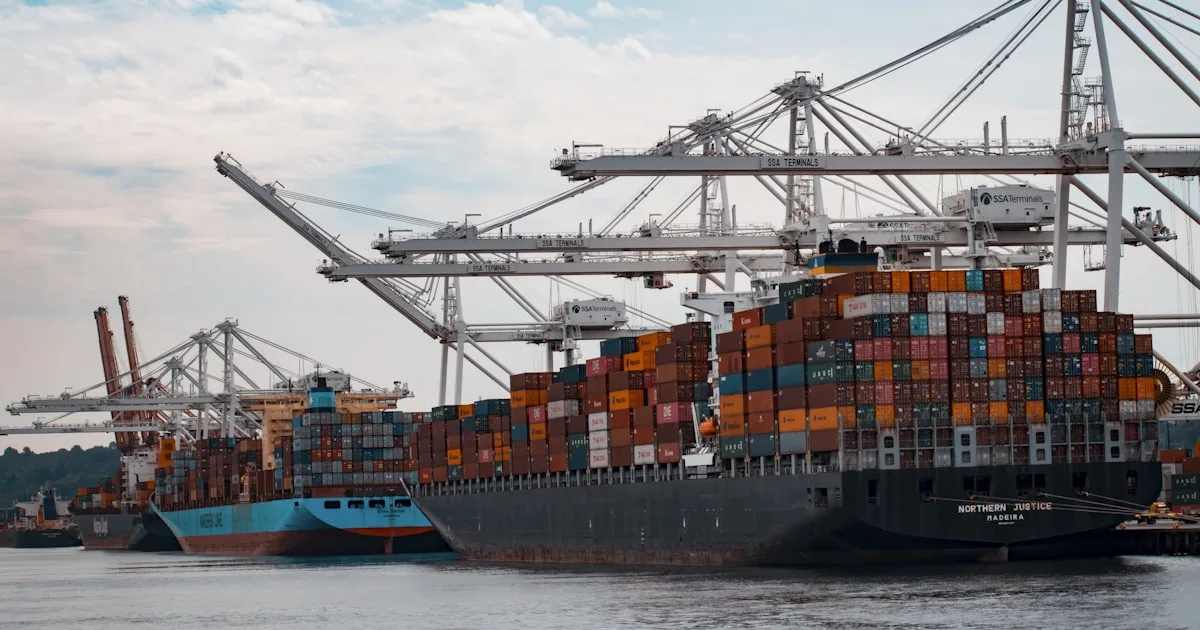
India is one of the fastest-growing major economies and a critical sourcing destination for US importers. From textiles and home furnishings to automotive parts, granite and machinery, billions of dollars’ worth of Indian goods enter the United States every year.
If you’re considering importing from India to the USA, this guide walks through the whole process in order — what to check before you order, how the cargo leaves India, and how it clears US customs and reaches your door.
How to Import from India to the USA: The Short Answer
- Check your product’s rules — which US agencies regulate it (FDA, CPSC, the FTC’s textile labeling rules, EPA and others).
- Classify it under the US tariff schedule and confirm the duty, including any additional US tariff in force for India on the date of import.
- Find and vet a supplier, and agree on price, specifications, payment and the Incoterm.
- Set up as an importer: your importer number and a customs bond.
- Your supplier clears Indian export customs, and the cargo ships by sea (FCL or LCL) or air.
- File the ISF at least 24 hours before an ocean container is loaded in India.
- Clear US customs: the entry is filed, duties and fees are paid, and any agency review is completed.
- Deliver: the container is collected from the US port and trucked to your warehouse, or transloaded for the rest of the trip.
What Goods Are Commonly Imported from India to the USA?
The India-USA trade lane carries a diverse range of products:
- Textiles and garments — India is one of the world’s largest textile producers (see our guide to importing textiles from India)
- Furniture and home furnishings — solid wood, metal and handcrafted pieces (furniture from India)
- Granite and natural stone — slabs and monuments from Rajasthan and South India (granite from India)
- Automotive parts — components for US manufacturers and the aftermarket (auto parts from India)
- Pharmaceuticals and chemicals — generic medications and industrial and specialty chemicals
- Agricultural products, machinery and engineering goods
Step 1: Check the Rules for Your Product
The US has no general import license, but specific products carry agency rules that are checked at the border:
- FDA. Food, drugs, cosmetics and medical devices fall under the FDA. Food needs a registered foreign facility, prior notice of each shipment and, for the importer, a Foreign Supplier Verification Program (FSVP); drugs need establishment registration and drug listing; cosmetics have their own facility registration and product listing.
- Textile labeling. Apparel and home textiles must carry the fiber content, the country of origin and the identity of the manufacturer or importer under the FTC’s textile rules, plus care instructions.
- CPSC. Children’s products need third-party testing by a CPSC-accepted laboratory and a Children’s Product Certificate; many other consumer products need a General Certificate of Conformity.
- EPA and TSCA. Chemicals, and composite wood used in furniture, have EPA requirements, including the TSCA Title VI formaldehyde standards for plywood, MDF and particleboard.
- Wood and the Lacey Act. Wooden packaging must be heat-treated and stamped to ISPM 15, and many wood and plant products — furniture and handicrafts among them — need a Lacey Act declaration naming the species and where it was harvested.
- Forced labor. The UFLPA applies to goods made wholly or partly in Xinjiang wherever they are finished — so an Indian garment made from Xinjiang cotton yarn or fabric can be detained. Keep records that trace your goods back to their raw materials.
- Country-of-origin marking. Goods and their retail packaging must be marked “Made in India” in a conspicuous, permanent way.
Ask your customs broker to check which agency flags sit on your product’s tariff line before you commit to a purchase order.
Step 2: Classify the Product and Work Out the Duty
Every product is classified under the 10-digit Harmonized Tariff Schedule of the United States (HTSUS), and the classification decides the duty. The HS code on an Indian invoice is usually only 6 digits and may not be right for US purposes — as the importer, you are responsible for getting it right. See our guide to HTS classification.
The duty on an Indian product can include:
- The base (MFN) rate for the tariff line. India has no free trade agreement with the US, and the Generalized System of Preferences that once let many Indian goods enter duty-free no longer applies — India’s eligibility ended in 2019 and the program itself lapsed at the end of 2020.
- Any additional US tariff in force for India on the date of import.
- Section 232 duties on certain products whatever their origin — steel, aluminum, copper and their listed derivatives, cars and auto parts, and timber and wood products including upholstered furniture.
- Antidumping and countervailing duties on specific products covered by an order.
Rates change and vary by tariff line, so we confirm them for your HS codes at quoting. Our 2026 tariff guide explains how the layers stack, and the free landed cost calculator shows which apply to common products.
Duty is charged on the customs value — normally the price you paid for the goods, not including international freight and insurance — and origin is where the goods were last substantially transformed. Declaring a lower value or a false origin is customs fraud, and the liability sits with the importer.
Step 3: Find a Supplier and Agree on Terms
US buyers find Indian suppliers through export promotion councils, B2B marketplaces, trade fairs and buying agents. Before you pay a deposit:
- Check who you are dealing with — manufacturer or merchant exporter — and that they hold an Import Export Code (IEC), which every Indian exporter needs.
- Approve samples and agree on the specification the production run will be checked against.
- Arrange an inspection before shipment, especially for a first order.
- Agree on payment terms and packing: export cartons, ISPM 15-stamped pallets and a packing list that matches the invoice.
Then choose the Incoterm. FOB an Indian port (or EXW with a forwarder handling export) puts you in control of the main freight and US-side charges, which is what we recommend to most importers. Under CIF or CFR the supplier’s forwarder books the freight and US destination charges arrive on your invoice later. Treat DDP offers with caution: ask who is acting as US importer of record and how the goods are valued. We do not offer DDP shipping. See our Incoterms guide for importers.
Step 4: Set Up as an Importer
- Importer number. A US business normally imports under its IRS employer identification number (EIN); your customs broker files a CBP Form 5106 to create your importer record.
- Power of attorney for your licensed customs broker to file entries for you.
- Customs bond. Required for formal entries — commercial shipments valued over $2,500, and goods regulated by other agencies such as the FDA whatever their value. A single-entry bond covers one shipment; a continuous bond covers every entry for a year and also your ISF. See our customs bond and ISF guide.
Step 5: Export from India and Ship by Sea or Air
Indian export customs. Your supplier — or its customs broker — files the shipping bill, India’s export declaration, electronically on ICEGATE under the exporter’s IEC. Once Indian customs issues the Let Export Order, the container can be loaded.
Ports. Most cargo ships from Nhava Sheva (JNPT, Mumbai) and Mundra (Gujarat) on the west coast, and Chennai and Kattupalli on the southeast coast. Tuticorin serves South India’s textile and granite exporters, while Kolkata and Haldia cargo usually goes by feeder to a hub such as Colombo or Singapore. Containers from North India are typically stuffed at an inland container depot such as Tughlakabad (Delhi) or Dadri and moved by rail to Mundra or Nhava Sheva; Bengaluru cargo goes by rail from ICD Whitefield to the Chennai-area ports.
Ocean Freight
- FCL (Full Container Load) — you book an entire 20ft or 40ft container. Best from around 13–15 CBM, and for heavy cargo such as granite and machinery.
- LCL (Less than Container Load) — your cargo shares a container with other shippers. Best for smaller shipments; it takes longer because the cargo is consolidated in India and separated again in the US.
Typical transit times, confirmed per booking:
- India’s west coast (Nhava Sheva/Mundra) to Los Angeles/Long Beach: about 25–30 days
- India to New York and the US East Coast: about 20–25 days on services routed via the Suez Canal; services routed around the Cape of Good Hope take roughly 10–15 days longer, and carriers choose the routing service by service
Air Freight
Air freight from India takes about 2–4 days airport to airport and suits time-sensitive, high-value or light cargo. Most air cargo leaves from Delhi (DEL), Mumbai (BOM), Bengaluru (BLR) and Chennai (MAA).
Step 6: File the ISF Before the Container Is Loaded
For ocean shipments, the Importer Security Filing (ISF, or “10+2”) must reach CBP at least 24 hours before the container is loaded aboard the vessel in India. It needs details only your supplier has — the manufacturer, the container stuffing location and the consolidator among them — so agree in advance on when the supplier sends them. A late, inaccurate or missing ISF can draw liquidated damages of $5,000 per violation. Air shipments have no ISF.
Step 7: Clear US Customs
While the cargo is on the water, your customs broker prepares the entry so the goods can be released soon after arrival:
- The entry is filed in CBP’s ACE system with the commercial invoice, packing list and bill of lading (or air waybill). After release, the entry summary and duties are due within 10 working days.
- Duties and fees are paid: the duty from Step 2, the merchandise processing fee (a percentage of value with a minimum and a maximum, updated every October) and, for ocean cargo, the harbor maintenance fee.
- The FDA and other agencies review the products they regulate; CBP can also X-ray or physically examine the container, which adds days and costs.
If this is your first shipment, our guide for first-time importers covers US customs in more detail.
Step 8: Deliver to Your Door
After release, a full container has to leave the terminal within a few free days before demurrage starts, so we book drayage before the vessel arrives. The container goes straight to your dock, to a partner facility for transloading into domestic trailers, or into partner warehousing; LCL cargo is collected from the warehouse where the shared container was unloaded. Our guide to avoiding demurrage and detention covers the charges that catch importers out at this stage.
How Much Does It Cost to Import from India to the USA?
Costs vary widely, and the landed cost is built from the same parts every time:
- The goods at the agreed price (FOB or EXW)
- Inland haulage in India — rail or road from an inland factory to the port
- Ocean or air freight and the carrier’s surcharges, plus cargo insurance
- US destination charges at the port or warehouse
- Customs: the broker’s fee, the ISF, the bond, duties and fees
- Delivery to your door
- Event-driven charges — exams, demurrage, detention and storage
Routing matters on this lane: whether the service goes through the Suez Canal or around the Cape of Good Hope changes the transit time to the East Coast. A good freight forwarder will provide a door-to-door quote that covers freight, documentation and customs clearance — and lists what is excluded, such as duties and taxes and event-driven charges like exams or demurrage.
Common Mistakes When Importing from India
- Using the supplier’s 6-digit HS code without checking the 10-digit US line.
- Missing labels — fiber content and origin on textiles, “Made in India” on goods and packaging.
- Untreated wooden pallets or crates without an ISPM 15 stamp.
- Assuming a Suez routing to the East Coast when the service goes around the Cape.
- A late ISF, because the supplier sent the data after the container was already loaded.
- No supply-chain records for cotton goods that could contain Xinjiang inputs.
- Shipping without cargo insurance — a carrier’s liability is limited by law, under COGSA to $500 per package unless a higher value is declared.
How AGF Helps with India Imports
American Global Freights provides India-to-USA freight forwarding from end to end:
- Ocean freight from Nhava Sheva, Mundra, Chennai and Kolkata, and from inland depots serving Delhi and Bengaluru, with origin handling by our WCA partner agents in India
- Air freight from Delhi, Mumbai, Bengaluru and Chennai
- US import clearance through our licensed customs brokers
- Drayage from US ports to your warehouse through our drayage partners
- Partner warehousing in Southern California
- Transparent door-to-door quotes, with exclusions listed
See India to USA shipping for how we run the lane, or request a free quote.
Frequently Asked Questions
Do I need a license to import from India to the USA?
Not a general one. Any business can import most goods with an importer number (usually its EIN) and, for commercial shipments, a customs bond. Specific products need agency compliance — FDA registration for food, drugs and cosmetics, CPSC certificates for children’s products, textile labels — so check your product’s rules before you order.
How long does it take to import from India?
By sea, about 25–30 days from India’s west coast to Los Angeles/Long Beach and about 20–25 days to New York on a Suez routing, plus collection and delivery; around the Cape of Good Hope, add roughly 10–15 days. Air freight takes about 2–4 days airport to airport.
Does AGF have an office in India?
No. Origin handling in India — pickup, export customs and loading — is done by our WCA partner agents. Our team in California manages the shipment and clears it through US customs with our licensed customs brokers.
Is there a free trade agreement between India and the USA?
No. Indian goods pay the normal (MFN) duty for their tariff line plus any additional duty in force on the date of import. The GSP program that once made many Indian products duty-free no longer applies.
What documents do I need to import from India?
A commercial invoice, a packing list and the bill of lading (or air waybill) from the shipment; the ISF data for ocean cargo; a customs bond and a power of attorney for your broker; and any product certificates or declarations, such as FDA registrations or a Lacey Act declaration. Your supplier handles the Indian shipping bill.

 USA Office
 China Office
 DDC — Authorized Representative in Kazakhstan
 Europe — Achot Baghdasarian