Suez Is Coming Back, Panama Keeps Moving: What 2026 Routing Actually Looks Like
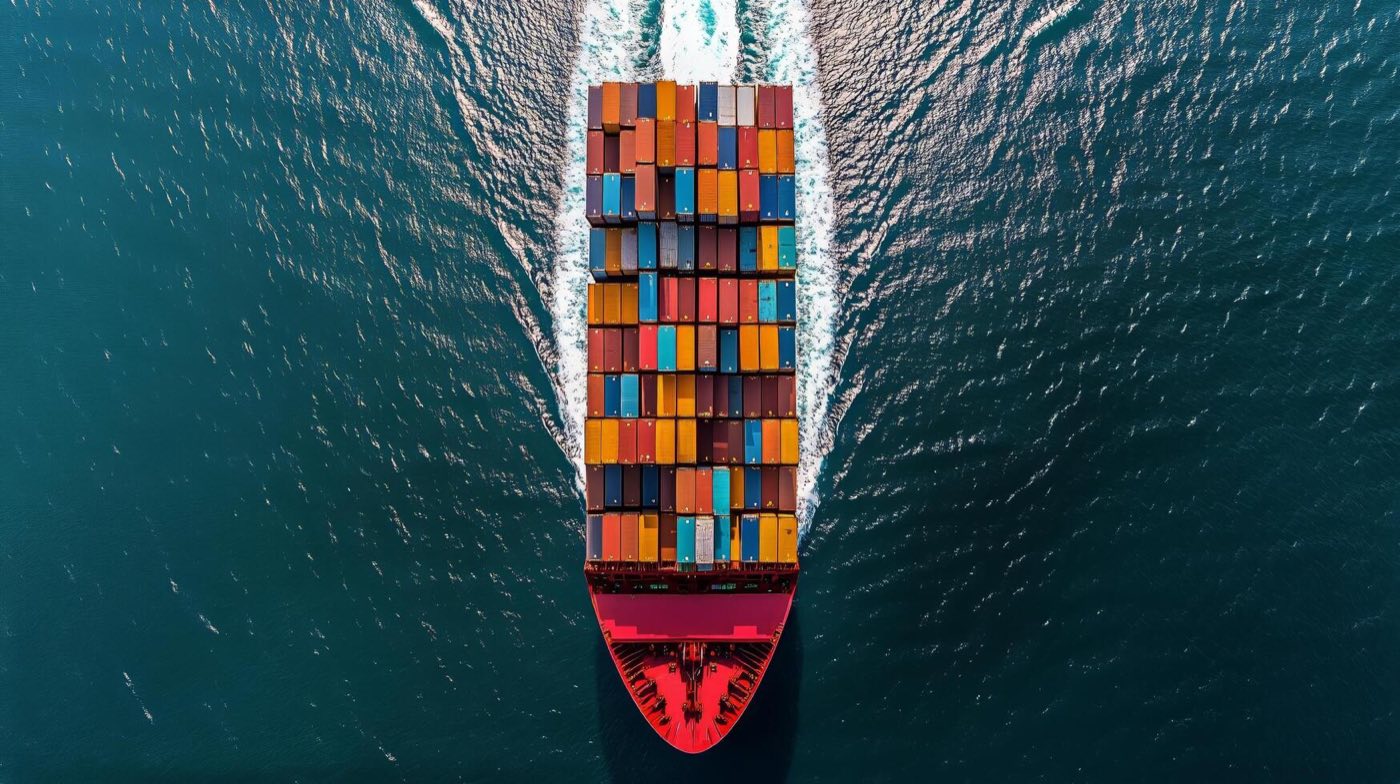
Two things are happening to the world’s ocean routing at the same time, and they point in opposite directions. Asia–Europe traffic is starting to come back through the Suez Canal after two years around the Cape of Good Hope. Meanwhile the Panama Canal has been adjusting draft and transit slots with its water levels — tightening through August and September, then easing again at the end of September.
For anyone planning ocean freight in the next two quarters, both matter — and neither is as settled as the headlines suggest.
The Red Sea: a selective return, not a switch
Carriers have begun testing Suez transits again. Maersk has run successful test voyages and announced full-loop Suez transits returning on a service; MSC has resumed Red Sea transits on several services; ONE has launched a Red Sea–China service. A growing share of westbound Asia–Europe capacity is being routed through Suez, and some analysts expect that share to keep rising.
But “selective” is the operative word, and the reversals prove it. CMA CGM announced a return and then reversed the decision. Hapag-Lloyd has stayed cautious. Carriers are not restoring whole networks — they are routing individual strings through Suez where the operational gain outweighs the risk, and keeping the Cape as the default elsewhere.
What that means for a shipper: do not plan a Q4 schedule on the assumption your specific service has switched. Ask which routing your booking actually takes. Two containers on the same trade lane, booked the same week with different carriers, can now differ by a week or more in transit.
The second-order effect nobody enjoys: congestion
Here is the part worth planning around. A large-scale return does not smooth things out — at first it does the opposite.
Vessels that have been spread across a longer Cape rotation arrive at European hubs closer together. That means port congestion and short, sharp rate spikes at exactly the moment the routing is supposedly improving. Once the bunching clears, the picture inverts: the shorter routing releases a large block of effective capacity into a market that was already oversupplied, which is downward pressure on rates.
So the honest planning advice is a barbell. Expect volatility and possible delays at European gateways in the near term; expect softer rates once the transition works through. Neither is a reason to change your whole strategy, but both are reasons not to lock a long position on the basis of this week’s number.
Panama: tight, then easing — and still moving
While Suez loosened, Panama constricted. Through August and September 2026 the Panama Canal Authority adjusted the maximum authorised draft for the Neopanamax locks downward, citing below-expected precipitation in the canal watershed, and postponed and re-scheduled the steps as conditions moved. Daily transit slots were adjusted at both the Neopanamax and Panamax locks.
Update, early October 2026: after September rainfall in the watershed, the Authority eased again at the end of the month, raising the Neopanamax draft limit and adding transit slots. That is the point of this section: Panama’s limits move with the weather in both directions, so check the current figures when you book rather than assuming either the tight or the loose version holds.
When the limits tighten, the practical effects for containerised cargo are familiar from the last drought cycle:
- Draft limits cap how deep a ship can load. On some strings that means sailing below full capacity, which tightens space and firms rates.
- Slot limits mean auctions and priority. Booking certainty on Panama routings is worth more whenever slots are cut.
- East Coast transits get less reliable, which pushes some cargo toward West Coast discharge plus rail — the routing our intermodal drayage partners and inland rail arrangements exist to serve.
If your China–US East Coast planning still assumes a stable 28–35 day Panama transit, that number deserves a fresh look. Our China to USA lane page sets out the alternatives, and we go deeper on the timing question in how long shipping from China to the USA takes.
Where this leaves Eurasian overland
There is a third routing worth mentioning, because both of the above make it more interesting rather than less.
Rail and multimodal across Eurasia are not affected by either canal. China–Kazakhstan rail volumes have been growing, and container traffic on the Trans-Caspian Middle Corridor has continued to rise. For cargo moving between China, Central Asia and Europe, overland is not a fallback for when the sea lanes misbehave — it is a routing with its own economics, typically much faster than sea for the same corridor and far cheaper than air.
That is why we now run rail freight and multimodal as a service in its own right rather than a footnote to ocean freight.
Two honest caveats. The Middle Corridor remains the more constrained option, with finite ferry capacity across the Caspian and more handoffs than a single rail routing. And the corridor is markedly directional — the large majority of container traffic runs westbound, which means eastbound space and pricing behave differently from what a symmetrical model would predict.
What to actually do
- Ask which routing your booking takes. On Asia–Europe, “the usual transit time” is no longer a single number.
- Build a congestion buffer into European arrivals for the next couple of quarters, especially on time-sensitive retail cargo.
- Do not lock long-term rates on a single week’s spot signal. The direction of travel on rates is softer; the path there is bumpy.
- Re-check Panama-routed transits rather than reusing last year’s assumption, and price the West Coast plus rail alternative alongside.
- For China–Europe and China–Central Asia cargo, price rail against ocean properly. The gap is often smaller than people assume, and the transit difference is large.
If you want the realistic options for your specific corridor priced side by side rather than a single default, that is the conversation to have with us.
 USA Office
 China Office
 DDC — Authorized Representative in Kazakhstan
 Europe — Achot Baghdasarian