Shipping Container Types and Dimensions: Which Container Does Your Cargo Need?
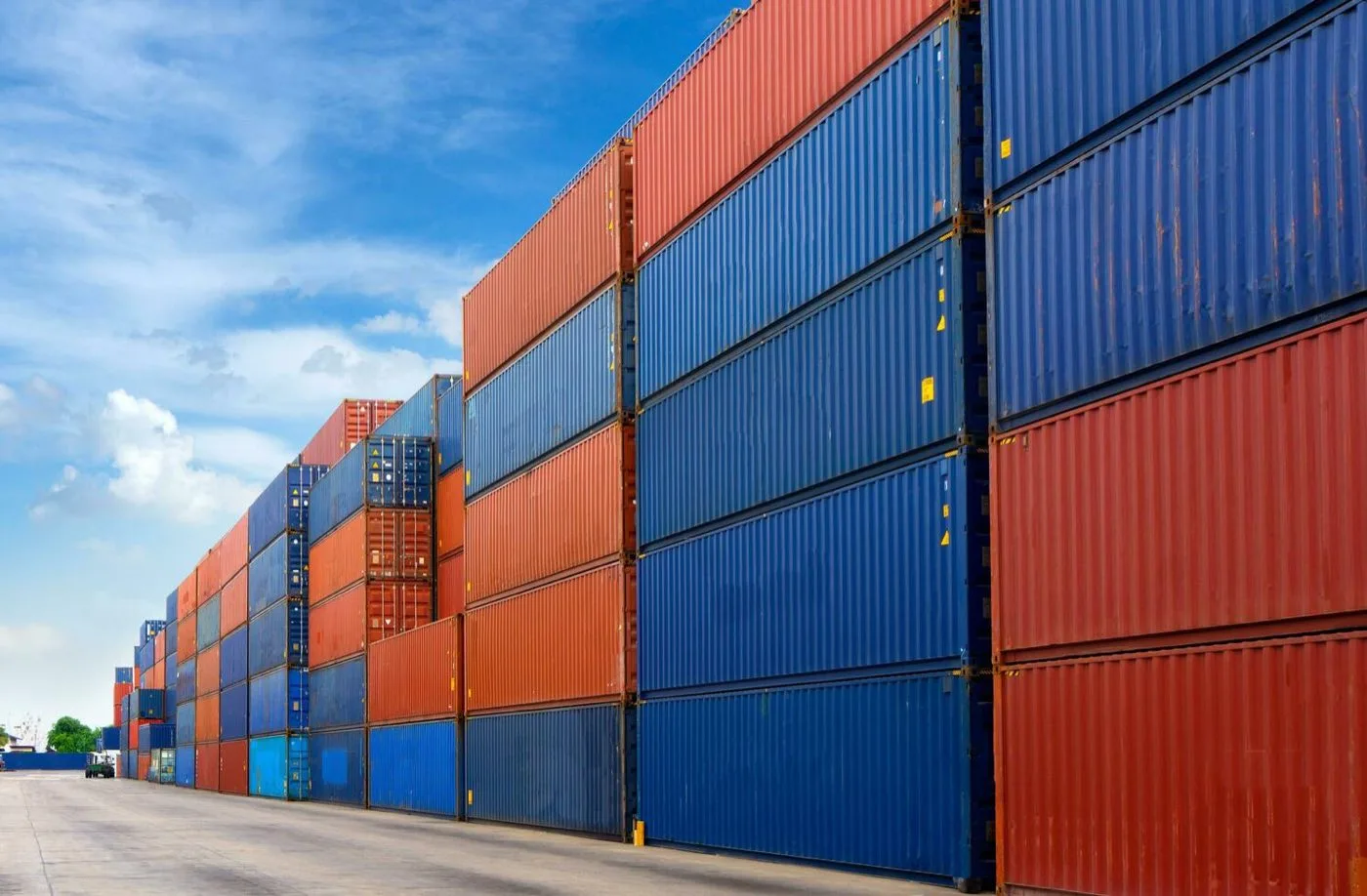
The shipping container is the reason global trade works at scale — a standardized steel box that moves seamlessly from factory truck to port crane to ocean vessel to rail car. But “standardized” doesn’t mean “one size fits all.” Choosing the right container type and size affects your freight cost per unit, how much product fits per shipment, and whether your cargo arrives intact. Here’s the practical guide.
The Standard Dry Containers
20ft Standard (20GP)
- Internal dimensions: roughly 5.9m long × 2.35m wide × 2.39m high
- Capacity: about 33 cubic meters (CBM); practical loading is usually 25–28 CBM
- Max payload: around 28,000 kg — but road weight limits in the US typically cap practical cargo weight lower (roughly 19,000–20,000 kg for highway transport)
The 20-footer is the choice for dense, heavy cargo: tiles, stone, machinery parts, metals, liquids in drums. You’ll hit the weight limit long before you fill the space.
40ft Standard (40GP)
- Internal dimensions: roughly 12.03m × 2.35m × 2.39m
- Capacity: about 67 CBM; practical loading 54–58 CBM
- Max payload: similar to a 20ft — around 26,000–28,000 kg
Twice the volume of a 20ft but almost the same weight limit, which is why it suits voluminous, lighter cargo: furniture, apparel, toys, appliances. Crucially, a 40ft costs nowhere near twice the freight of a 20ft — often only 20–30% more — so if your cargo is light enough, the bigger box wins on cost per cubic meter almost every time.
40ft High Cube (40HC)
Same footprint as the 40GP but about 30cm taller, giving roughly 76 CBM of capacity. High cubes now dominate the Trans-Pacific trade — for bulky consumer goods that extra height is nearly free volume. If you’re importing furniture or e-commerce inventory from China to the US, this is probably your container. A 45ft high cube exists too, though availability varies by lane.
Specialized Containers
- Reefer (refrigerated) — powered temperature control, typically from about −25°C to +25°C, for food, pharmaceuticals, and other perishables. Slightly smaller internal volume due to insulation, and meaningfully higher freight cost. See our cold chain logistics guide for what temperature-controlled shipping involves end to end.
- Open Top — removable tarpaulin roof for cargo that must be loaded by crane from above or stands taller than door height: machinery, glass sheets, oversized equipment. Over-height cargo ships under an “out of gauge” surcharge.
- Flat Rack — a floor with end walls and no sides, for cargo too wide or awkward for any box: vehicles, boats, industrial plant, project cargo. Requires professional lashing and securing.
- Tank containers — for bulk liquids and chemicals, operated under specialized rules and certifications.
FCL, LCL, and When the Container Is Yours
With FCL (Full Container Load) the container carries only your cargo, whatever the fill level; with LCL (Less than Container Load) you buy space in a shared container by the cubic meter. The crossover point is lower than most shippers assume — often around 13–15 CBM, FCL becomes cheaper and faster than LCL, because you skip consolidation warehouses at both ends. We’ve written a full comparison in our FCL vs LCL guide.
How to Choose: Three Questions
- Is your cargo heavy or bulky? Calculate density (kg per CBM). Heavy and dense → 20ft. Light and bulky → 40HC. If a 40ft would exceed road weight limits before it’s full, two 20-footers may be the answer.
- Does it need protection, temperature, or special handling? Standard dry box, reefer, or open top/flat rack — and note that specialized equipment needs booking earlier, especially in peak season.
- How does it palletize? A 40ft floor fits roughly 20–21 standard US pallets (48×40in) single-stacked; a 20ft fits about 10. Sometimes redesigning your carton or pallet pattern adds an extra layer — which is free money at scale. We help clients optimize exactly this, together with our partner warehouses.
Getting It Right Before You Book
Container choice is one of those decisions that looks trivial until it isn’t: an overweight container stopped at the port scale, out-of-gauge cargo booked into a standard box, or a season where high cubes are scarce on your lane. When you request a quote from AGF, tell us the cargo’s dimensions, weight, and nature — we’ll recommend the right equipment and catch these problems while they’re still free to fix. For a deeper look at how the ocean leg works end to end, see our ocean freight service overview.



 USA Office
 China Office
 DDC — Authorized Representative in Kazakhstan
 Europe — Achot Baghdasarian