How to Ship Cargo from China to Los Angeles: Complete Guide
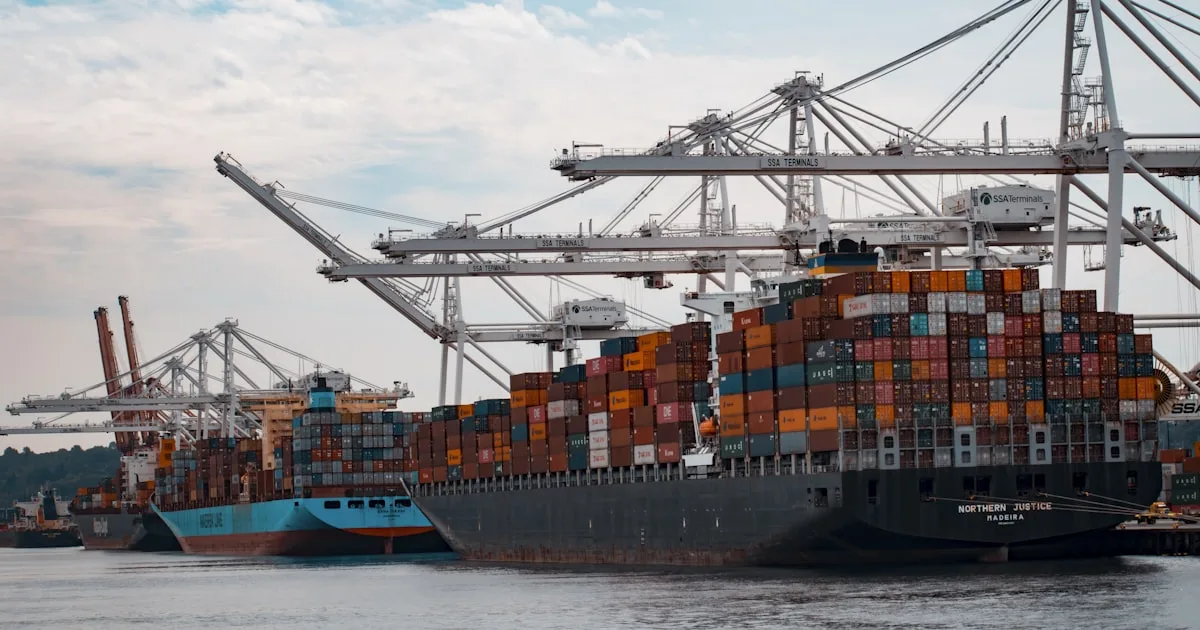
Los Angeles is the largest port of entry for Chinese goods in the United States. If you’re importing products from China — whether furniture from Guangdong, electronics from Shenzhen, or textiles from Zhejiang — the Port of Los Angeles and Port of Long Beach will likely be where your cargo arrives.
This guide walks you through the entire process, step by step, so you know exactly what to expect.
Step 1: Find a Licensed Freight Forwarder
The first thing you need is a freight forwarder — a logistics company that coordinates the movement of your cargo from China to your doorstep in Los Angeles.
Look for a freight forwarder that is:
- FMC-licensed (Federal Maritime Commission) — this is required for any company arranging ocean freight in the US
- Experienced on the China-to-LA trade lane — the Trans-Pacific route has specific nuances
- Transparent with pricing — avoid forwarders who give you a low base rate and then add surprise surcharges later
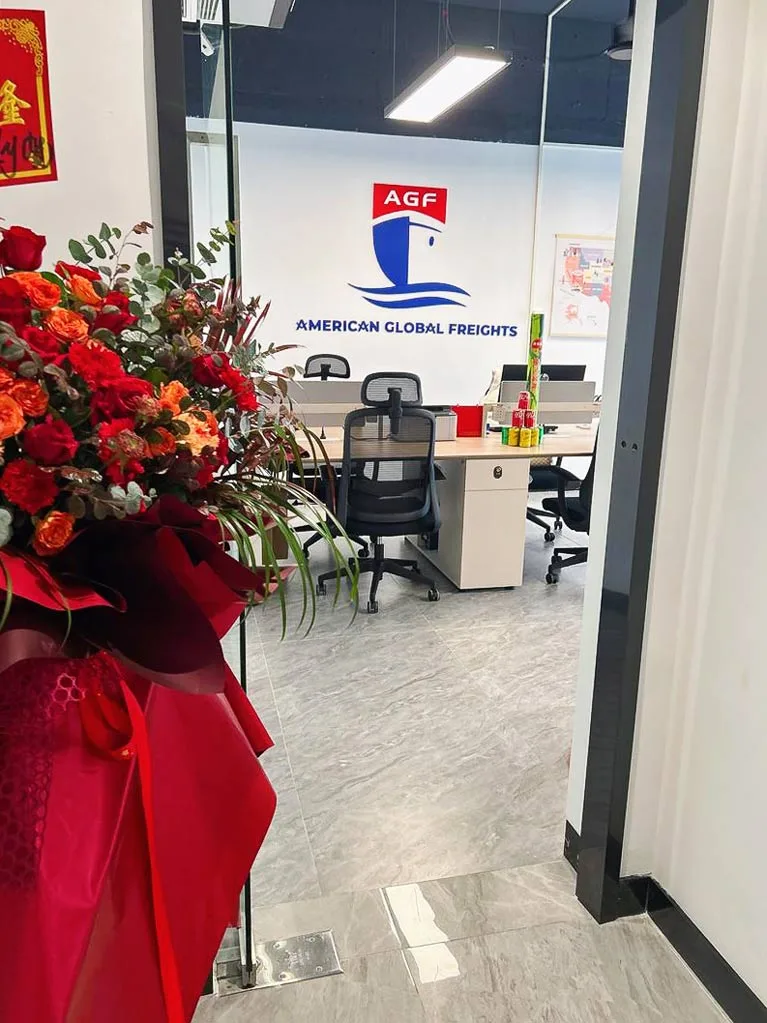
At American Global Freights, we’re an FMC-licensed NVOCC based in Glendale, California, with our own office in Foshan, China. That means our own people manage both ends of the shipment — Foshan at origin, Glendale at destination.
Step 2: Choose Ocean Freight or Air Freight
You have two main options for getting cargo from China to Los Angeles:
Ocean Freight
- Transit time: 14-20 days from most Chinese ports to LA/Long Beach
- Best for: Large shipments, heavy or bulky goods, cost-sensitive cargo
- Container options: FCL (full container — 20ft, 40ft, 40ft HC) or LCL (shared container)
- Cost: Significantly cheaper per kilogram than air freight
Learn more about ocean freight forwarding
Air Freight
- Transit time: 3-7 days from China to LAX
- Best for: Time-sensitive, high-value, or small shipments (under ~500 kg)
- Options: Express (3-5 days), standard (5-7 days), consolidated (cost-effective for smaller loads)
- Cost: Higher per kilogram, but faster and lower total cost for small volumes
Learn more about air freight forwarding
Rule of thumb: If your shipment is over 2 CBM (cubic meters) or 500 kg, ocean freight is almost always more cost-effective. Below that threshold, compare both options — sometimes the math favors air.
Step 3: Prepare Your Shipping Documents
Before your cargo can leave China, you’ll need several documents in order:
- Commercial Invoice — itemized list of goods, value, quantity, and terms of sale
- Packing List — detailed breakdown of how goods are packed (cartons, pallets, etc.)
- Bill of Lading (B/L) — ocean freight transport document issued by the carrier or NVOCC
- Air Waybill (AWB) — air freight equivalent of the bill of lading
- Certificate of Origin — may be required depending on the product and trade agreements
- Product-specific certificates — FDA registration (food/cosmetics), FCC certification (electronics), CPSC compliance (children’s products), etc.
Your freight forwarder should handle most of this documentation for you. At AGF, our team in Foshan coordinates export documentation directly with your Chinese supplier.
Step 4: Cargo Pickup in China
Once your order is ready at the factory or warehouse, the freight forwarder arranges pickup. This is where having a physical office in China makes a real difference.
AGF’s Foshan office handles:
- Factory and warehouse cargo pickup
- Loading supervision (making sure goods are properly loaded and secured)
- Cargo inspection (verifying quantities and condition before shipment)
- Export documentation and customs clearance in China
- Consolidation at origin for LCL shipments
If your freight forwarder doesn’t have their own China operation, they’ll rely on a local agent — which adds a layer of communication and potential for miscommunication.
Step 5: Ocean Transit to the Port of Los Angeles
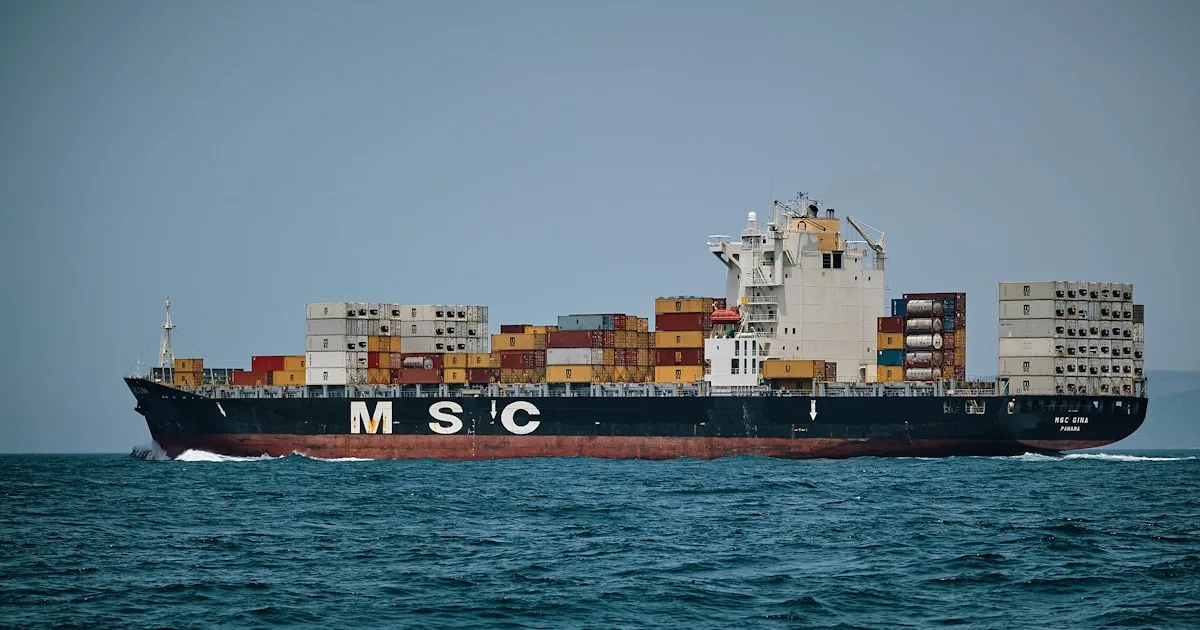
For ocean freight, your cargo departs from a Chinese port — typically Shenzhen (Yantian or Shekou), Guangzhou (Nansha), Shanghai, Ningbo, or Qingdao — and arrives at the Port of Los Angeles or Port of Long Beach.
Here are typical transit times:
| Origin Port | Destination | Transit Time |
|---|---|---|
| Shenzhen (Yantian) | Los Angeles / Long Beach | 14-18 days |
| Guangzhou (Nansha) | Los Angeles / Long Beach | 16-20 days |
| Shanghai | Los Angeles / Long Beach | 12-16 days |
| Ningbo | Los Angeles / Long Beach | 13-17 days |
During transit, your freight forwarder tracks the vessel and provides updates. AGF provides proactive communication — we don’t wait for you to ask where your shipment is.
Step 6: US Customs Clearance
This is where many importers get nervous, but with the right freight forwarder, customs clearance is straightforward.
Here’s what happens:
- ISF Filing (10+2) — the Importer Security Filing must be submitted to US Customs (CBP) at least 24 hours before the vessel departs from China
- Entry Filing — your customs broker files the entry with CBP, declaring the goods, their value, and the applicable tariff codes (HTS)
- Duty Assessment — CBP calculates duties based on the HTS classification. Some Chinese goods are subject to additional Section 301 tariffs
- Government Agency Review — if your goods are regulated (food, cosmetics, electronics, children’s products), agencies like FDA, CPSC, or FCC may need to review and release them
- Cargo Release — once duties are paid and all agencies clear the goods, your container is released for pickup
AGF coordinates all of this, with entries filed by our licensed customs brokers.
Step 7: Drayage and Final Delivery
After customs clearance, your container needs to get from the port to its final destination. This short-haul transport is called drayage.
AGF arranges intermodal drayage through our drayage partners, covering:
- Container pickup from the Port of LA or Long Beach
- Chassis management
- Delivery to your warehouse, distribution center, or business location
- Transloading (transferring goods from a container to a truck) if needed
If you need storage, our partner warehouses in Southern California provide transloading, inventory management, and distribution near the ports for fast turnaround.
For deliveries beyond Southern California, AGF arranges ground transportation via FTL or LTL trucking to anywhere in the United States through vetted carrier partners.
How Long Does the Entire Process Take?
Here’s a realistic timeline for ocean freight from China to Los Angeles:
| Stage | Timeline |
|---|---|
| Booking and documentation | 2-5 days |
| Cargo pickup in China | 1-3 days |
| Export customs clearance (China) | 1-2 days |
| Ocean transit to LA/Long Beach | 14-20 days |
| US customs clearance | 1-3 days |
| Drayage and delivery | 1-3 days |
| Total | 20-36 days |
Air freight cuts this to approximately 7-14 days total, depending on the service level.
How Much Does It Cost?
Shipping costs from China to Los Angeles depend on several factors:
- Mode: Ocean freight is significantly cheaper than air freight per unit
- Volume: FCL rates are per container; LCL rates are per CBM/weight
- Origin and destination: Inland pickups and deliveries add cost
- Cargo type: Hazardous, oversized, or temperature-sensitive goods cost more
- Market conditions: Ocean freight rates fluctuate with demand and capacity
For a detailed cost breakdown, read our guide on ocean freight costs from China to the USA.
AGF quotes door to door with the standard charges built in and lists what is excluded — duties and taxes, and charges that depend on events (exams, demurrage, detention, storage) — so the quote is the number you plan with. Request a free quote to get pricing specific to your shipment.
Common Mistakes to Avoid
After years of managing China-to-LA shipments, here are the most common mistakes we see importers make:
-
Not filing ISF on time — if your ISF is late, you face a $5,000 penalty per violation. Make sure your freight forwarder files it before the vessel leaves China.
-
Incorrect HTS classification — wrong tariff codes mean wrong duty rates. This can lead to underpayment (and penalties) or overpayment.
-
Ignoring demurrage and detention deadlines — once your container arrives at the port, the clock starts ticking. Learn how to avoid demurrage and detention fees.
-
Choosing the cheapest freight forwarder — a low rate that doesn’t include destination charges, customs fees, or drayage isn’t actually low. Always compare door-to-door quotes, and check what each one excludes.
-
Not having proper product compliance — FDA, CPSC, FCC, and other agencies can hold your cargo at the port if compliance documentation is missing.
Ready to Ship from China to Los Angeles?
American Global Freights specializes in China-to-USA shipping with our own office in Foshan, China and FMC-licensed operations in California. We handle everything from factory pickup to final delivery — with transparent door-to-door quotes.
Get a free quote: Call +1 (818) 220-8800 or request a quote online.
 USA Office
 China Office
 DDC — Authorized Representative in Kazakhstan
 Europe — Achot Baghdasarian