How to Choose a Freight Forwarder in Los Angeles: A Checklist You Can Verify
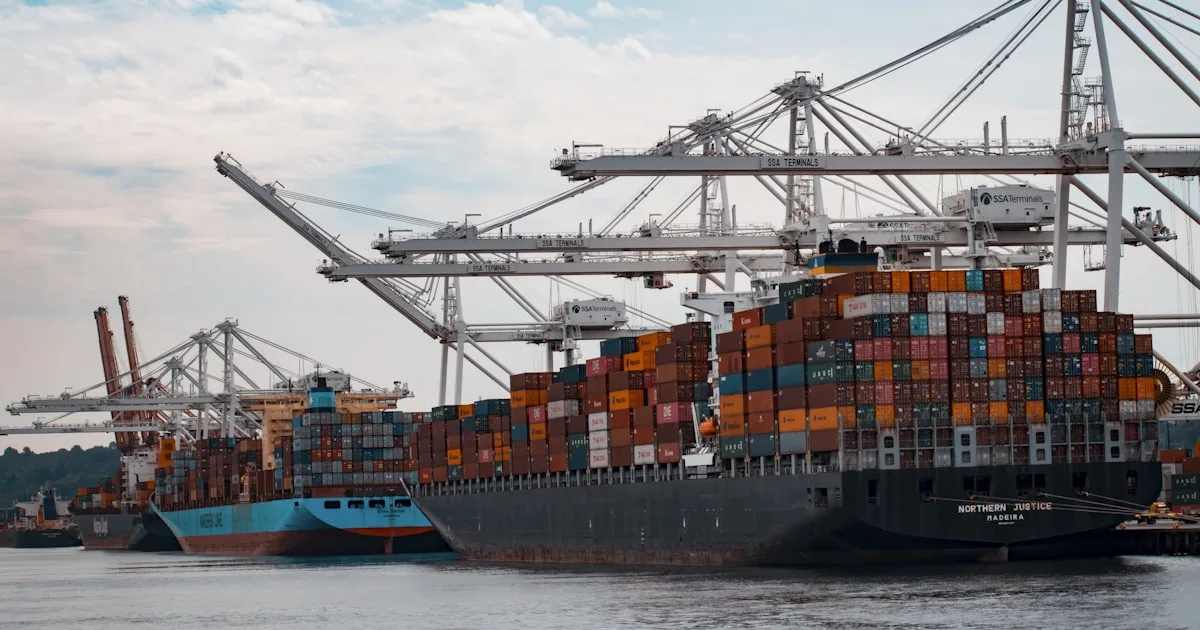
A large share of America’s imports from Asia lands at the twin ports of Los Angeles and Long Beach, so there is no shortage of freight forwarders in Southern California. The hard part is telling them apart before you hand one your cargo, your customs entry and your money.
This checklist is how we would vet a forwarder in Los Angeles — including us. Every item is something you can check or ask about in one conversation, and at the end you will find where American Global Freights stands on each point, with facts you can verify.
If you are choosing a forwarder for a specific route, our guides on finding a reliable freight forwarder in the USA and choosing a forwarder for China to USA shipping go deeper on those questions. This one is about what is specific to Los Angeles.
1. Check the FMC licence yourself
Any company in the United States that books ocean freight for you as a freight forwarder or a non-vessel operating common carrier (NVOCC) must be licensed by the Federal Maritime Commission as an Ocean Transportation Intermediary (OTI), and licensed intermediaries must keep proof of financial responsibility with the FMC.
Ask for the OTI number and look it up on the FMC’s licensing pages. A company that cannot give you a number, or whose name does not match the licence, is not the company that will be responsible for your cargo. If the difference between a forwarder and an NVOCC is new to you, see what an NVOCC is.
2. Find out who actually clears your customs
Every commercial import needs an entry filed with US Customs and Border Protection, and ocean cargo also needs an Importer Security Filing (ISF) at least 24 hours before the container is loaded abroad. Both are normally filed by a licensed customs broker.
Ask three questions:
- Who is the licensed broker — the forwarder’s own brokers or a partner? Either can work; you should know which.
- Who is the importer of record? It should be your company, with your own customs bond, so that duty, evidence and liability stay in your name.
- Who files the ISF, and when? A late or missing ISF can bring a penalty and a hold on the container. Our guide to customs bonds and the ISF explains both.
3. Ask who does the drayage — and what happens when free time runs out
Containers leave the Los Angeles and Long Beach terminals on drayage trucks, and most forwarders, AGF included, work with drayage partners rather than their own fleet. That is normal. What matters is how the forwarder manages it:
- How are terminal appointments and chassis arranged?
- Will they pre-pull a container to a yard when the terminal’s free time is about to end?
- Who tells you, and when, if a container is put on hold or selected for exam?
Free time is short, and demurrage (charged by the terminal) and detention (charged by the carrier for its equipment) start the day it ends. A forwarder that tracks these days for you saves real money; see how to avoid demurrage and detention fees and our drayage service in Los Angeles.
4. Plan how the cargo gets inland
If your goods are not staying in Southern California, ask how they move on. The two main options are moving the ocean container inland by rail, or transloading it near the ports into 53ft domestic trailers — often cheaper for light cargo bound for a distribution center, and it returns the carrier’s container sooner. A forwarder should be able to explain which one suits your cargo and why. More on this in transloading in Los Angeles and Long Beach.
5. Ask who is at the origin
Most problems that show up in Los Angeles started at the factory: wrong cartons, missing labels, a container loaded short or loaded badly. Ask who visits the supplier, checks the goods and supervises loading:
- the forwarder’s own staff in the origin country,
- a partner agent in a network, or
- nobody, with the supplier booking the freight itself.
All three exist, and the first two can both work well. You just need to know which you are paying for.
6. Read the quote for what it leaves out
Two quotes for the same container can differ mainly in what they exclude. A useful door-to-door quote states, up front, what is not included:
- duties, taxes and customs fees,
- charges that depend on events — customs exams, demurrage, detention, storage,
- terminal and port charges that are passed through at cost, such as the Clean Truck Fund rate at the Los Angeles and Long Beach terminals.
If a quote is much lower than the others, the difference is usually in this list. Ask for it in writing before you book.
7. Be careful with “DDP” or “duties included” offers
Delivered Duty Paid can be a legitimate Incoterm between a seller and a buyer. But “all-in, duties included” offers from forwarders often work by declaring a lower value, or by clearing the goods under someone else’s importer number. If customs later questions the value or the origin, the consequences — back duty, penalties, held cargo — reach the goods and the buyer. Ask exactly whose name the entry is filed under, and at what value. Our Incoterms guide explains DDP and the alternatives.
8. Understand liability and insurance
A carrier’s liability for lost or damaged cargo is limited by law: for ocean shipments to and from the United States, the Carriage of Goods by Sea Act limits it to $500 per package unless a higher value is declared, and air cargo is limited per kilogram under the Montreal Convention. For most commercial cargo that is far below its value. Ask whether the forwarder can arrange cargo insurance, on what terms, and how a claim is handled.
9. Test the communication before you commit
You will learn more from how a forwarder handles your first questions than from its website. Do you get one named person? Do answers come with specifics — routing, transit, what the quote excludes — or with generalities? Can they work in the language your supplier speaks? Ask for a reference from a client shipping similar cargo on the same route.
Where AGF stands on each check
We put our own company through the same list. Where we use partners, we say so.
| Check | American Global Freights |
|---|---|
| FMC licence | Licensed Ocean Transportation Intermediary, OTI #031665NF, covering both NVOCC and ocean freight forwarder |
| Network | World Cargo Alliance member #144028 |
| Customs | ISF and US entries filed by our licensed customs brokers; your company is the importer of record |
| Location | Headquartered in Glendale, in the Los Angeles area, serving the Ports of Los Angeles and Long Beach |
| Origin | Our own office and staff in Foshan, China, for supplier visits, consolidation and loading supervision; WCA partner agents at other origins |
| Drayage and warehousing | Through drayage partners and partner warehouses near the ports — we do not own trucks or a warehouse |
| Quotes | Door to door, with the exclusions listed up front |
| DDP | Not offered: you import in your own name at the true value |
| Compliance | Export-control and sanctions screening on every booking — see our compliance policy |
If you want to see how we answer the rest of the checklist — routing, transit, insurance, who your contact will be — ask us for a quote and judge us by the reply.

 USA Office
 China Office
 DDC — Authorized Representative in Kazakhstan
 Europe — Achot Baghdasarian